THE HISTORY OF THE TEXAS ICEHOUSE

A Texas tradition · Ice, neighbors, music, and a place to belong

Before an icehouse was somewhere to meet your friends, it was somewhere to keep supper from spoiling. Its first business was practical: put something cold within reach of people living through a Texas summer. Around that everyday errand, another kind of institution took shape.

People stopped for ice. They found refreshments, a seat, somebody they knew, and a reason to stay. Following that change takes us from ice-making machinery and household iceboxes to neighborhood stores, open doors, jukeboxes, and familiar faces. This is the story of the Texas icehouse tradition.
1. Before the refrigerator, there was the icebox

Imagine planning a week’s meals around a block of ice. Before electric refrigerators became household equipment, an insulated icebox helped keep food cool. Ice occupied a compartment near the top; the space below held perishables. As the block melted, keeping food cold meant arranging another delivery or returning to the icehouse.

Texas Co-op Power’s account describes northern ice being harvested, shipped south, and protected with insulation. It also records an agricultural exchange that makes the old system feel close to home: a Hill Country resident recalled trading eggs for a block of ice. Cooling depended on deliveries, local business, and the work of people moving something heavy that was disappearing all the while. [1]

That helps explain why an icehouse could matter to a neighborhood before it ever became a favorite place to spend an afternoon. It answered a repeated household need.

2. Texas learned to manufacture its own cold

Natural ice could travel only so far without melting, and wartime disruption made an unreliable supply even harder to obtain. The Handbook of Texas identifies the Civil War era as an important period in the state’s refrigeration history. A French-designed Ferdinand Carré absorption machine reached Texas through Mexico during the war.

Around 1865, Daniel Livingston Holden installed a Carré machine in San Antonio and improved its operation, including using distilled water to produce clear ice. By 1867, three San Antonio companies were manufacturing artificial ice. The handbook places that achievement alongside just five other ice plants elsewhere in the United States at the time. [2]

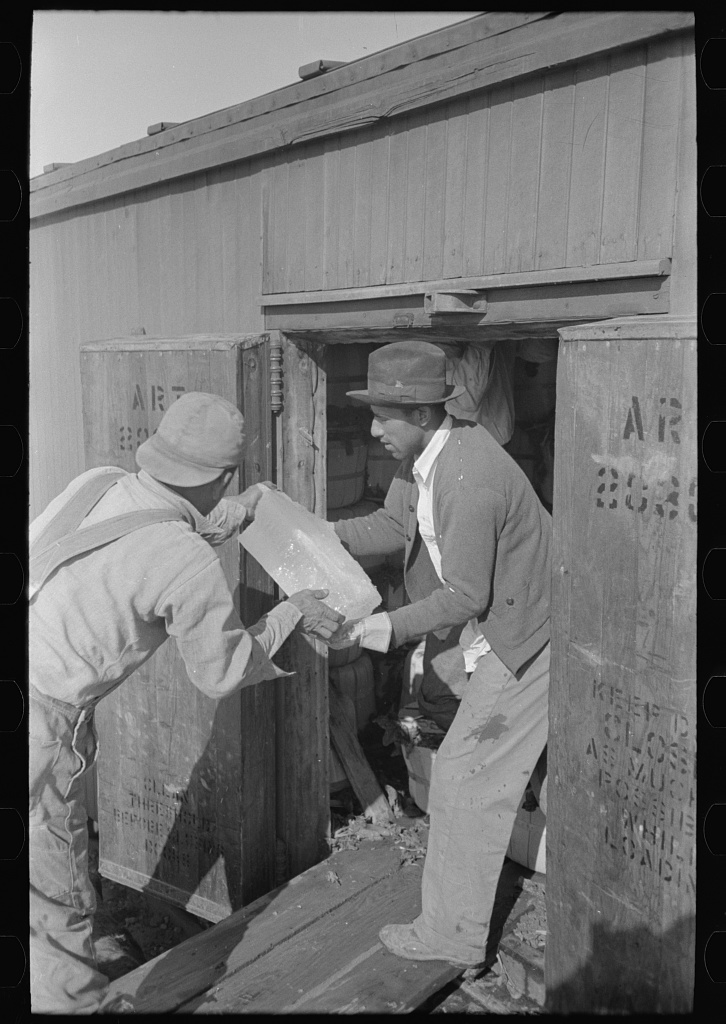
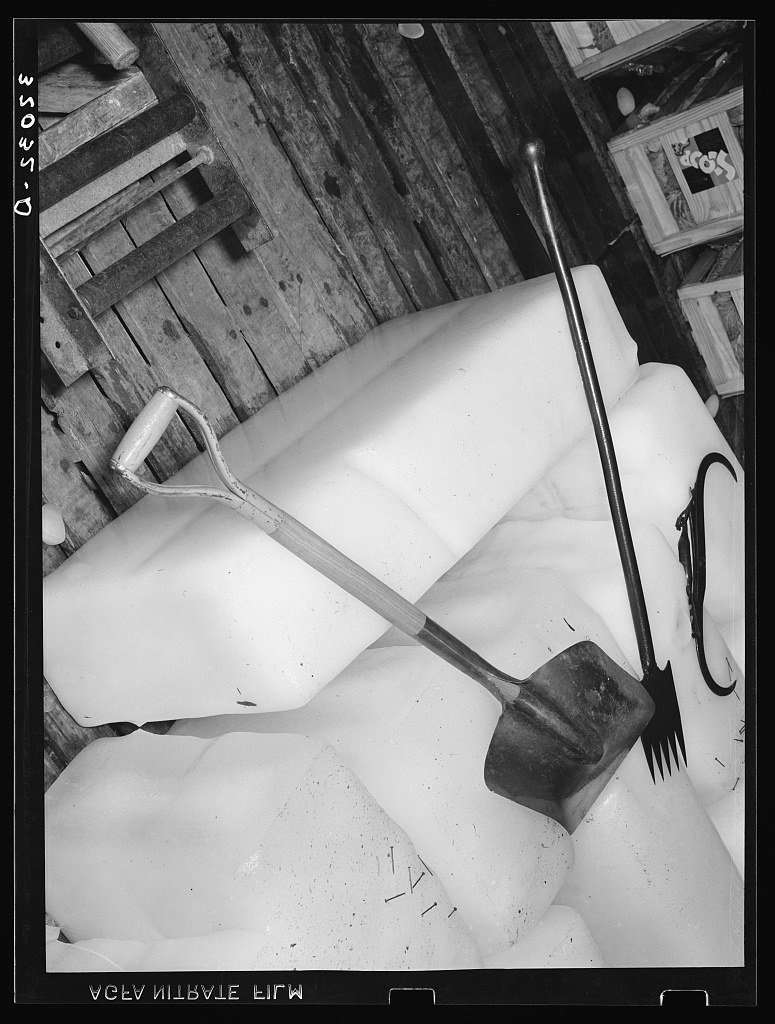
Commercial ice belonged to a bigger story of food preservation and transportation. The archival photographs below show that wider working world: workers icing a refrigerator car at La Pryor and ice-handling tools in a freight car at Alamo. These are industrial scenes, not pictures of neighborhood bars. [Photographs 2–3]

3. The ice dock and the convenience store share a family tree

North Texas has a direct connection to this story. In its own corporate history, 7-Eleven dates its beginnings to 1927, when Jefferson Green began selling everyday necessities from a Dallas icehouse dock. The business that became familiar as Tote’m later adopted the 7-Eleven name in 1946 to advertise its extended operating hours. [3]

The connection is useful because it shows the icehouse as a business that could adapt. A customer arriving for one essential item might need something else, too. Retail convenience and neighborhood hospitality grew from that simple opportunity, although individual businesses followed different paths.

Some became larger retail operations. Others became places to linger. Calling a modern venue an icehouse draws on one branch of this history; it does not mean every historic ice business turned into a tavern.

4. A 1939 glimpse from Crystal City

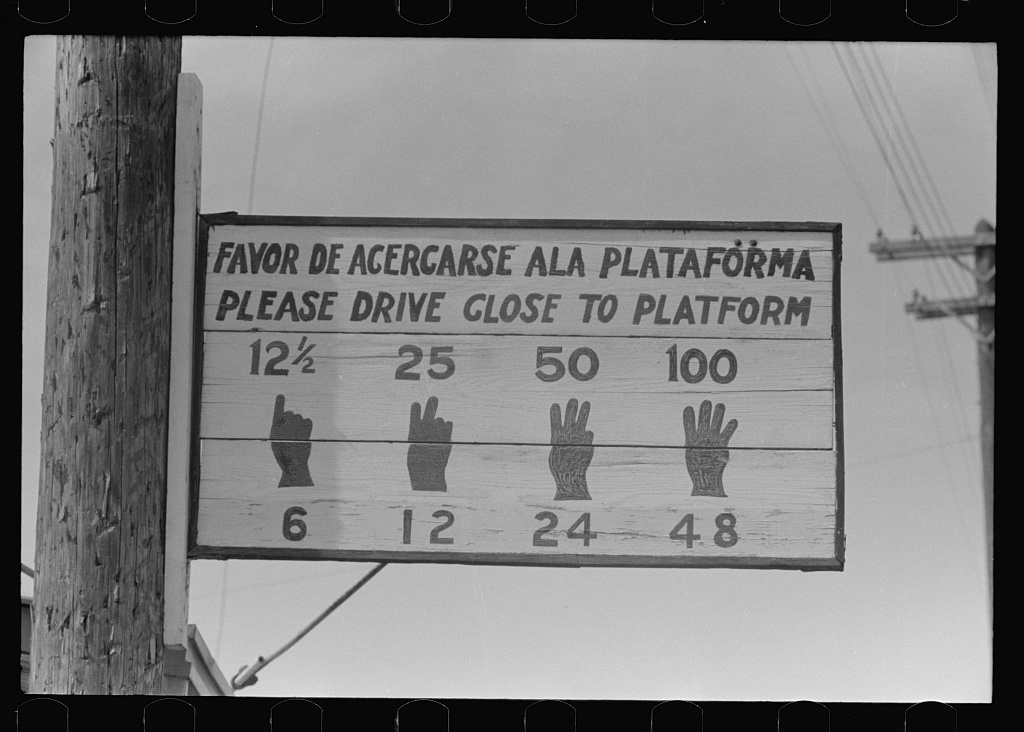
Russell Lee photographed a sign outside an icehouse in Crystal City in March 1939 while working for the Farm Security Administration. The Library of Congress preserves the negative and its catalog record. His photograph provides a dated record of how one Texas icehouse presented itself to passersby. [Photograph 1]

Historical photographs deserve close reading. A sign can document what a business advertised and how it presented itself, but one photograph cannot establish every detail of its ownership, customers, or daily life. Those questions require additional records and personal accounts.

5. When the errand became the afternoon

The Kitchen Sisters’ reporting on Texas icehouses describes neighbors and families talking, playing dominoes, listening to the jukebox, eating, and sometimes dancing outside. Their interviews connect the appeal of these places with relief from the heat and the habit of gathering close to home. At Sanchez’s in San Antonio, one interviewee described a clientele that included lawyers and judges alongside other patrons. [4]

That account gives the tradition a human scale. An icehouse could offer something more informal than a scheduled occasion: a place to drop in and find company. Conversation did not have to be arranged in advance.

The people give that room its character. The familiar greeting, the story heard twice, the friend bringing somebody new—those are useful ways to understand the attraction, rather than reducing the tradition to a particular drink or a set of decorations.

6. Ruben’s: a neighborhood story worth remembering

Museo del Westside preserves a particularly rich example. Manuel and Élida Reyes opened Ruben’s Ice House in San Antonio in 1959, naming it for their oldest son. The museum describes a walk-in cooler and picnic tables growing into a gathering place for the surrounding barrio. Neighbors came after work, food was prepared, and the jukebox supplied a soundtrack.

The family’s involvement extended beyond the building. The exhibition documents sponsorship of a women’s softball team and a chartered bus trip for friends, relatives, and neighbors to see the Houston Astros. Family photographs preserve the people behind those memories. [5]

This example makes community visible through specific actions. The icehouse provided a meeting place, but the people running it also helped organize shared experiences. Its history survives through the memories and photographs of the families who used it.

7. Open doors, simple furniture, and room to stay

In his 2016 account for Imbibe, Mark Stock describes the modest materials associated with the tradition: outdoor seating, gravel lots, picnic tables, improvised cooling containers, and straightforward refreshments. His account of Houston’s West Alabama Ice House follows a business that also served motorists and became a gathering place. [6]

Those details explain why an icehouse can feel recognizable without every example looking alike. Practical surroundings leave room for the activity that matters: sitting, visiting, listening, and staying awhile.

The architectural lesson is one of invitation. A photograph of an open room and occupied tables can say something a polished logo cannot: here is how people actually use this place. A building’s age, however, should always come from records rather than a weathered appearance.

8. Community history should include its complications

It is tempting to imagine every old gathering place as welcoming everyone equally. Texas history does not support that assumption. The Handbook of Texas documents segregation and discrimination affecting Black and Mexican American Texans across public life, including restaurants and other social spaces. [7]

That statewide context does not establish the practices of an individual icehouse. It does mean that claims about universal welcome need evidence. Preserving neighborhood histories—including those collected by Museo del Westside—helps us hear whose experiences shaped a place, rather than smoothing different lives into a single nostalgic picture.

9. Refrigerators changed the business

As household refrigeration spread, families depended less on purchased blocks of ice. Texas Co-op Power describes that transition as a major challenge for the traditional ice trade. Some buildings were abandoned or put to other uses; others continued as places to buy refreshments and gather. [1]

The technology that helped create the neighborhood icehouse also changed its future. Its original service could become less necessary while its social role remained useful. That distinction is central to understanding why the name survived after many customers stopped buying ice there.

10. The tradition kept changing

Veronica Meewes’ 2016 Texas Highways reporting shows Houston icehouses adapting to new neighbors and new tastes. West Alabama’s activities and beverage selection changed over time, while newer businesses drew inspiration from the older gathering-place model. Her reporting presents both continuity and change, rather than one frozen definition of an authentic icehouse. [8]

Another example comes from Corpus Christi. Brewster Street Icehouse describes opening in 2006 in a former freight building, with an ambition to bring families together around sports, concerts, and arts activities. Its account demonstrates how the name can be carried by a newer entertainment venue as well as an older neighborhood business. [9]

These examples have different histories and operating models. Together, they show why an icehouse should be understood through its own community and story, not judged only by whether it still sells blocks of ice.

A short timeline

  • 1860s: Mechanical ice-making develops in Texas; San Antonio becomes an early production center. [2]
  • 1927: Dallas ice-dock retailing becomes part of the origin story of 7-Eleven. [3]
  • 1939: Russell Lee records the Crystal City icehouse sign and South Texas ice-handling work. [Photographs]
  • 1959: The Reyes family opens Ruben’s Ice House in San Antonio. [5]
  • 2006: Brewster Street Icehouse opens in Corpus Christi. [9]

What lasts when the ice is gone?

Look across these histories and a pattern emerges: practical businesses became places people attached memories to. The surviving tradition contains food and drink, work and leisure, familiar faces and changing neighborhoods.

For a new generation carrying the name, the most meaningful inheritance is an everyday question: what makes people want to come back? The answer has to be lived in the room, through hospitality and shared experiences. An icehouse’s history gives that ambition roots. The people who gather there keep writing the story.

Sources and further reading

  1. Clay Coppedge, An Era Frozen in Time, Texas Co-op Power, August 2010.
  2. Willis R. Woolrich and Charles T. Clark, Refrigeration, Handbook of Texas, Texas State Historical Association.
  3. The 7-Eleven Fuel Story, 7-Eleven Fleet corporate history.
  4. The Kitchen Sisters, Hidden Kitchens Texas, Episode 25, reporting and oral-history interviews.
  5. Ruben’s Ice House, Museo del Westside exhibition, Reyes family photographs and memories.
  6. Mark Stock, The Texas Icehouse, Imbibe, November 7, 2016.
  7. Arnoldo De León and Robert A. Calvert, Segregation, Handbook of Texas, Texas State Historical Association.
  8. Veronica Meewes, The Ice Age: Houston’s Changing Icehouse Culture, Texas Highways, July 18, 2016.
  9. About Brewster Street Icehouse, venue’s own history.

Historical photograph records

1. Russell Lee, Sign in front of icehouse, Crystal City, Texas, March 1939. Library of Congress, Prints and Photographs Division, FSA/OWI Collection. Digital ID: LC-DIG-fsa-8a25690.

2. Russell Lee, Icing refrigerator car, La Pryor, Texas, March 1939. Same repository and collection. Digital ID: LC-DIG-fsa-8a25741.

3. Russell Lee, Ice and icing tools in freight car. Alamo, Texas, February 1939. Same repository and collection. Digital ID: LC-DIG-fsa-8b37101.

The Library of Congress catalog records state “No known restrictions” for these photographs and link to the FSA/OWI collection rights information. Historical locations and dates follow the original catalog captions.